An app to serve them all
The LATAM Airlines app was born in MVP mode as a mirror of the website, with a commercial and transactional focus. The challenge was how to turn it into an app for the airline's high-value customers without leaving anyone behind, and as a team we weren't sure how. This is where the story begins.
- Company
- LATAM Airlines
- My role
- Product Designer
- Team
- Product lead, PO, 8 devs, 1 product designer
- Year
- 2021
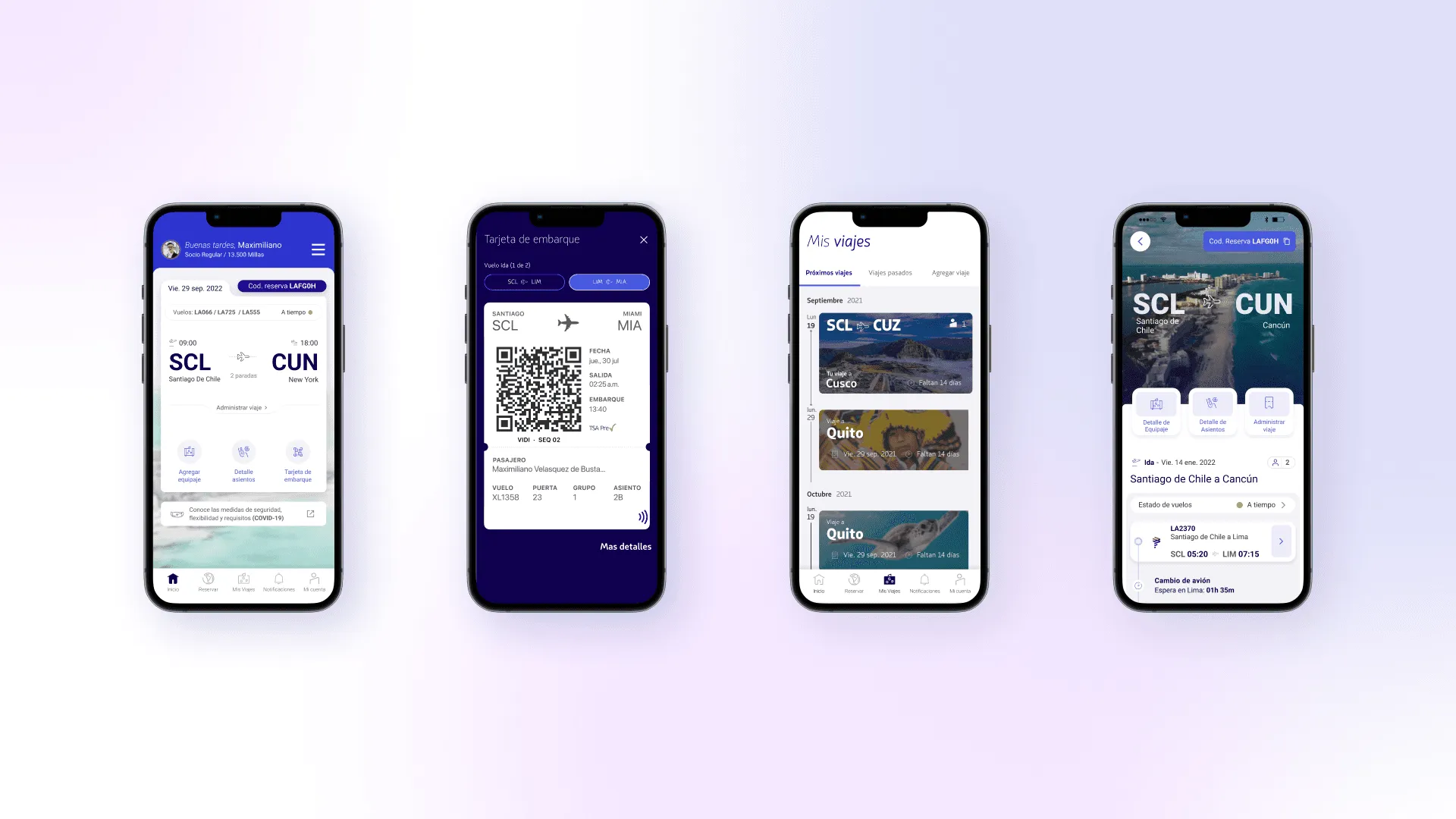
- high-value customer NPS
- +3.1
- app store rating on key traveler flows
- 1.4 → 4.3
- CSAT score, compared to web
- +1.3 pt
- app usage, compared to the previous quarter
- +17%
Getting to the heart of the traveler's experience
This project grew out of extensive research, with several teams coming together to understand travelers.
First, a large survey captured the thoughts and feelings of travelers of every kind. Then we ran on-site interviews in airports, to uncover the why behind the survey numbers.
My contribution was to run around 8 airport interviews with some of the airline’s high-value customers, and to support the research team in analyzing the results.
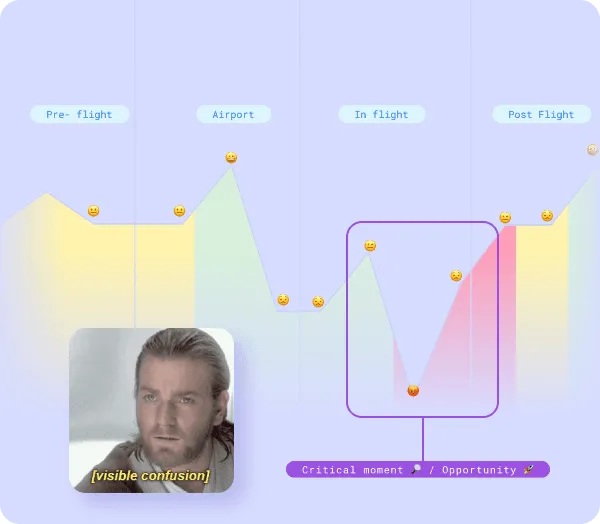
Two workshops, one product vision
The research gave us plenty of opportunities to add value to the product.
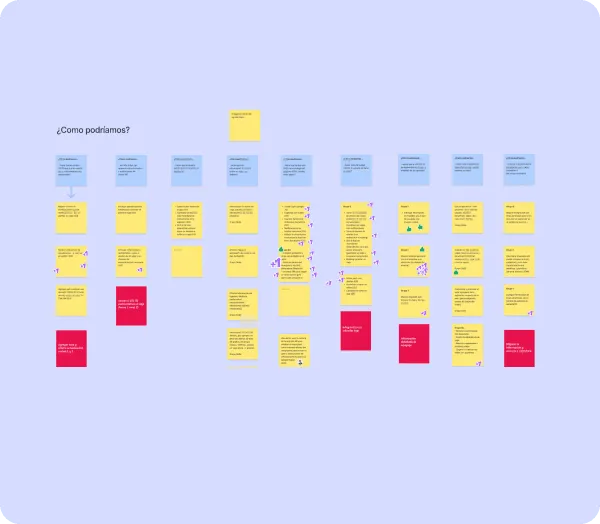
We started with two workshops. The first brought stakeholders from across the business together to define the product’s direction and agree on scope and dependencies. The second was a brainstorm on how the app could address travelers’ pain points and improve their journey.
The result was a bold vision: an app built around service, with transactional features taking a back seat to the traveler’s experience.
I designed and facilitated both workshops, then shaped what came out of them into the vision the stakeholders signed up to.
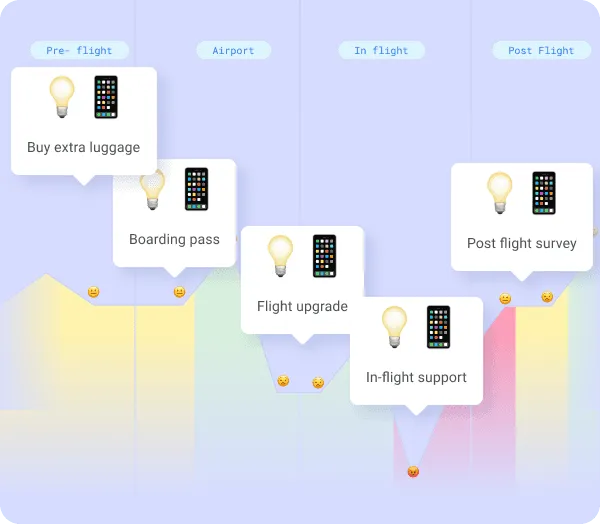
Support passengers on their day of travel.
If we support passengers during their day of travel, especially high-value customers, the overall rating of the product and the airline will improve. App store rating was one of the app team’s key objectives, and the main hypothesis was later split into smaller ones, such as: if we show the most valuable travel information on the homepage, passengers will feel more supported.
Three pillars to bring the vision to life
We broke the vision down into three pillars, each designed to deliver the most value to users:
- Homepage: a hub for everything that matters on the day of travel, with a little contextual upselling.
- My trips: order management, so every trip runs smoothly from start to finish.
- My profile: where people personalize their experience and follow their frequent flyer program.
My contribution was to bring users’ voices to the table and make sure what we learned in the survey and interviews was taken into account.
Hypothesis by hypothesis, increment by increment
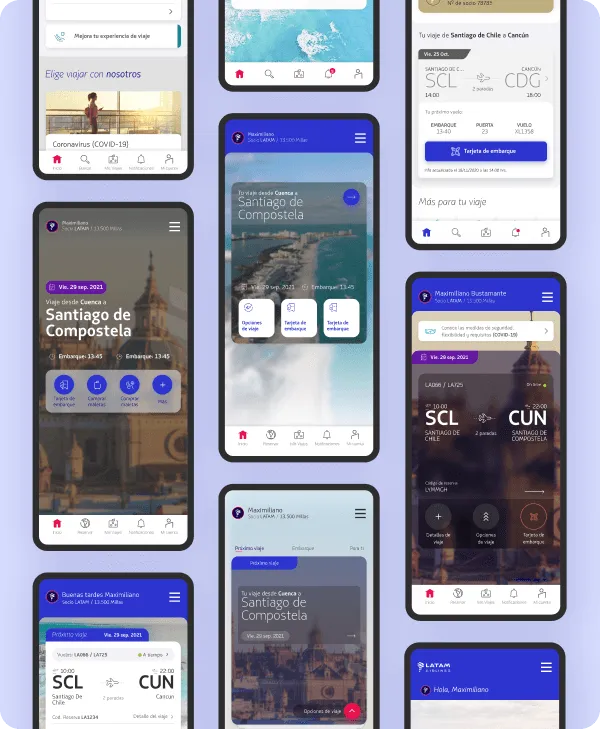
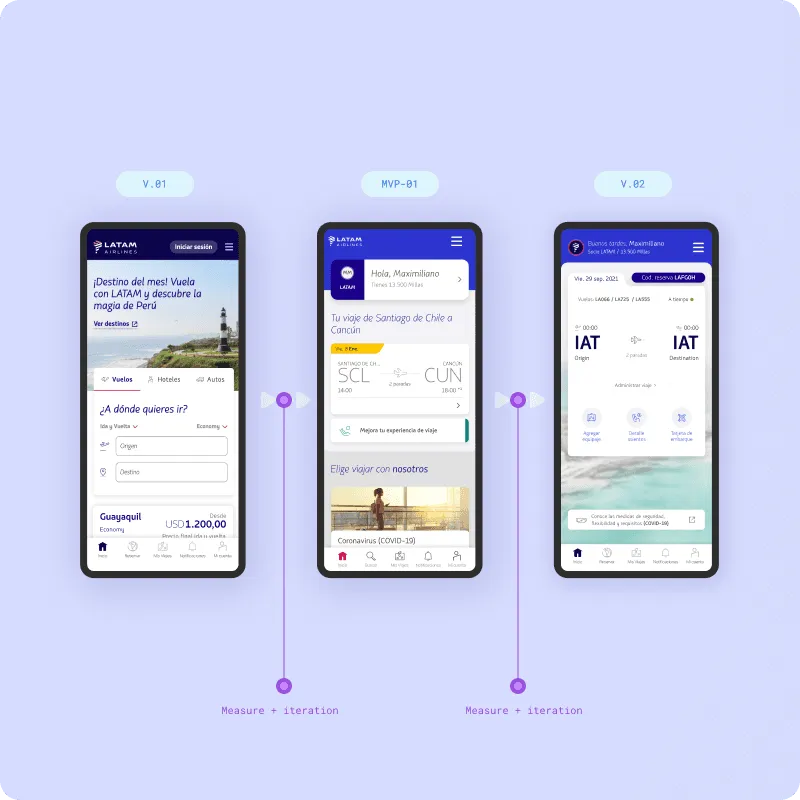
With all that information, I designed the app through a series of product increments, each based on a hypothesis. Combining the business vision with user feedback, every decision was rooted in improving key moments of the journey and tackling pain points directly.
That meant crucial travel moments, like showing boarding passes, and contextual information, like boarding gate details. It also meant contextual upselling, using recurring behavior to offer the right thing at the right moment.
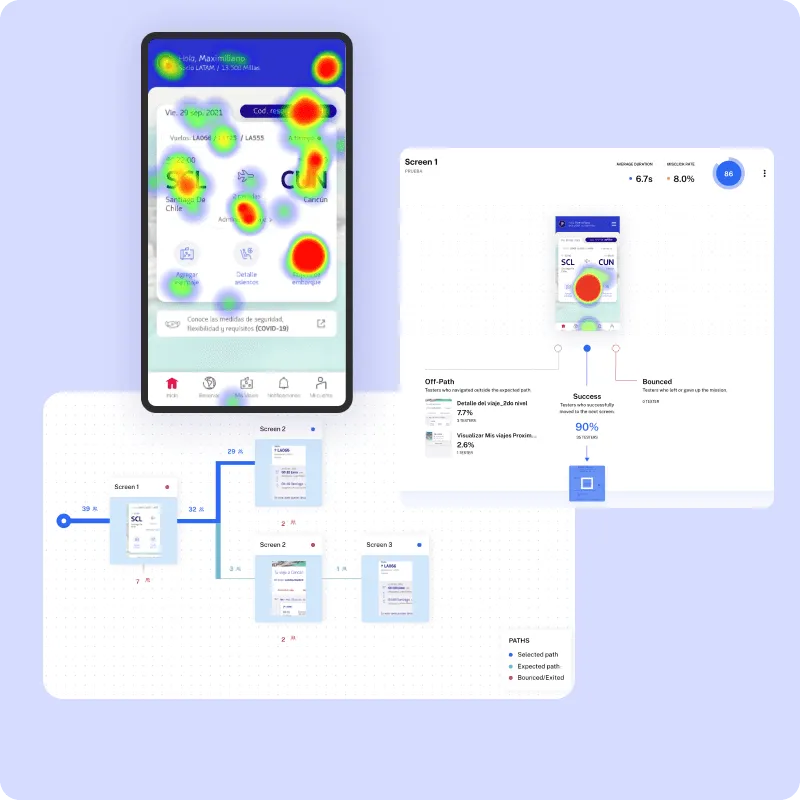
Each iteration went through a cycle of testing and refinement to keep the structure and navigation easy to use: card sorting, tree testing, usability tests and large surveys confirmed the new version met people’s needs.
An app for the day of travel
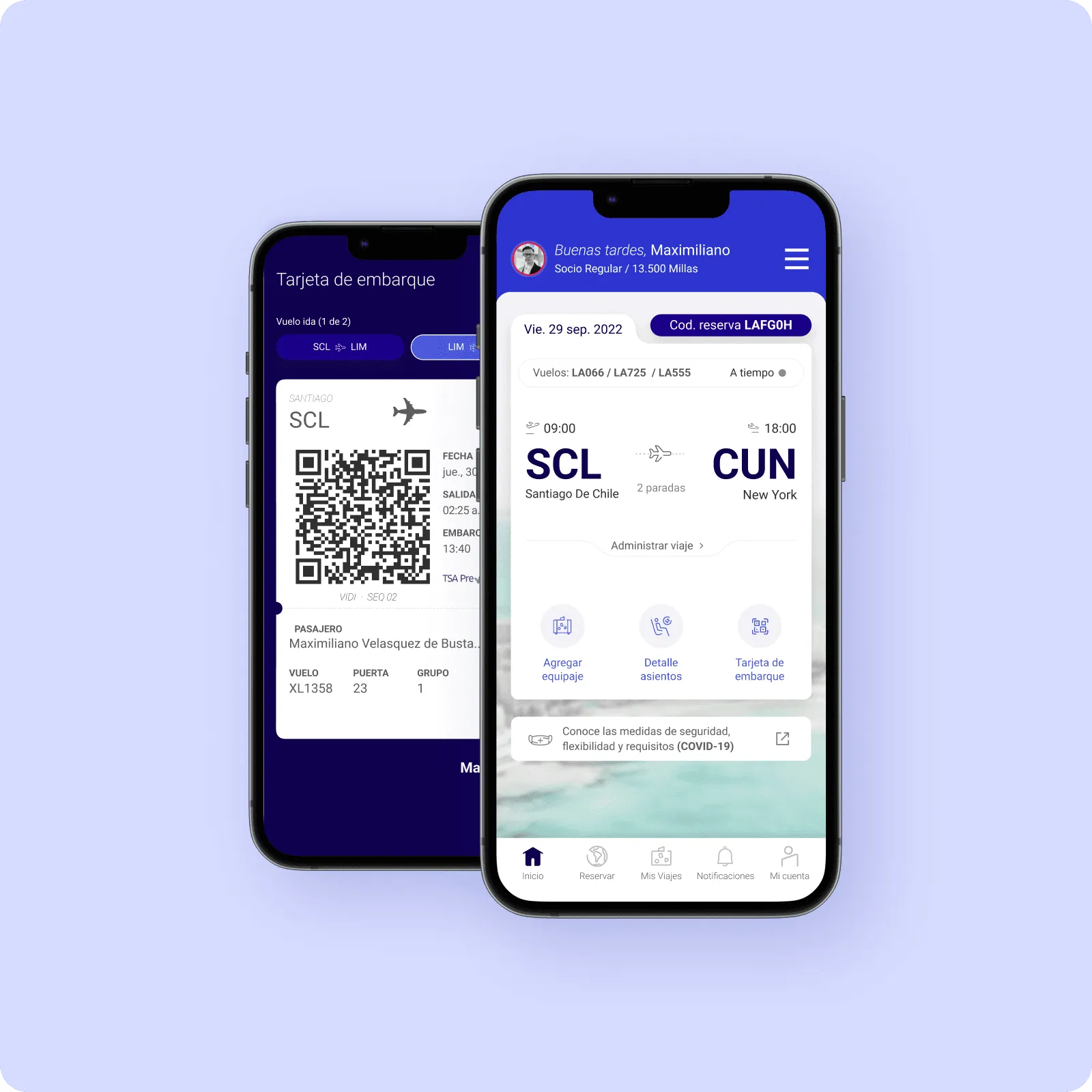
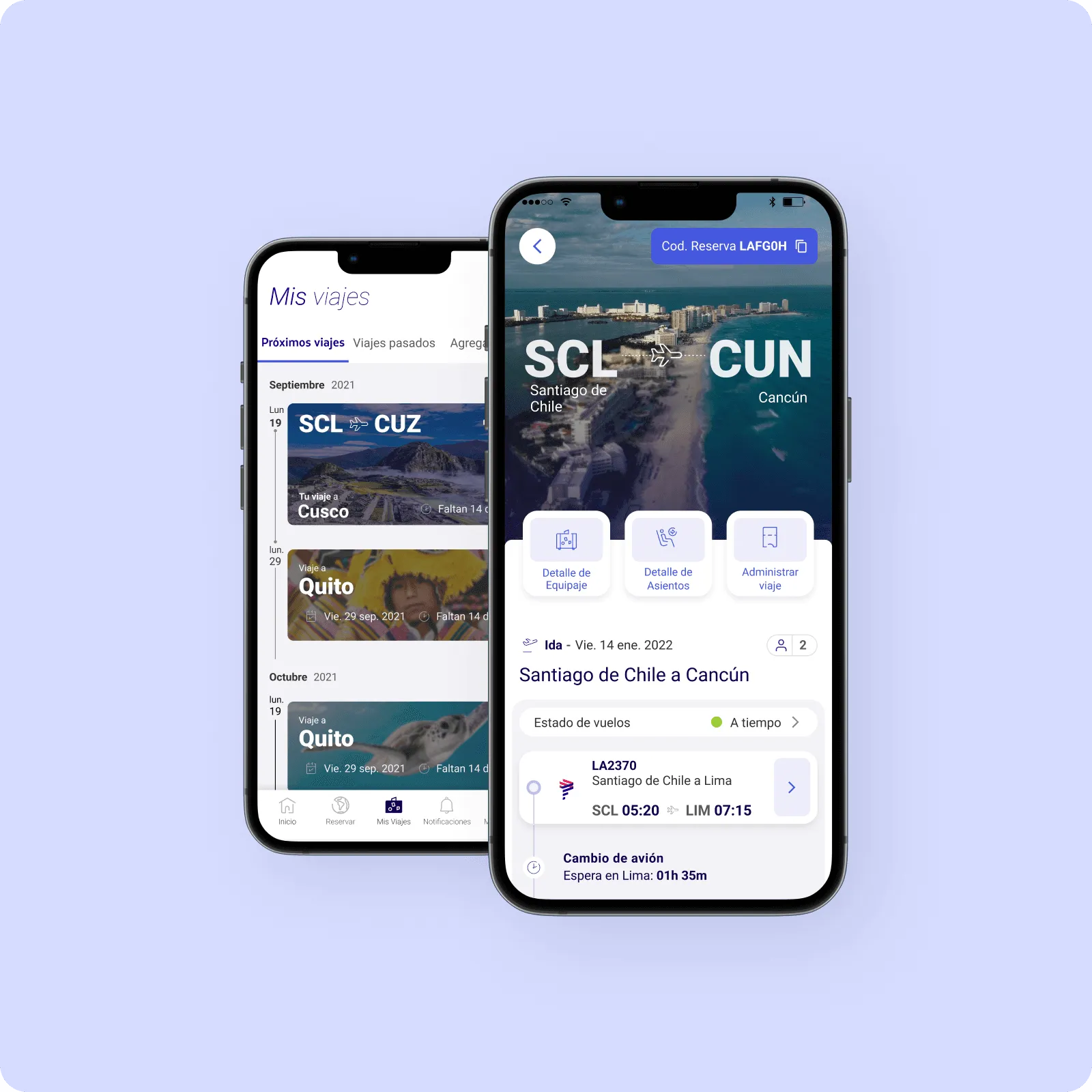
Homepage
- Immersive: the homepage greets passengers with images of their destination and shows their frequent flyer tier.
- Contextual: the content follows the journey. More than 48 hours before the flight it shows personalized information; within 48 hours the focus moves to check-in reminders and local weather; within 24 hours boarding passes and gate information take center stage.
- Quick access: a widget system that adapts to the moment of the trip. Baggage, seats, check-in and boarding passes are one tap away.
My trips
- Immersive: images of the destination build anticipation for the journey.
- Timeline: the heart of the page, adapting to where the traveler is in their journey.
- Order management: changing a seat, meal or baggage allowance takes a few taps.
- Key details first: flight information, departure times, gates and seats sit in the first view, and change with the journey.
Profile
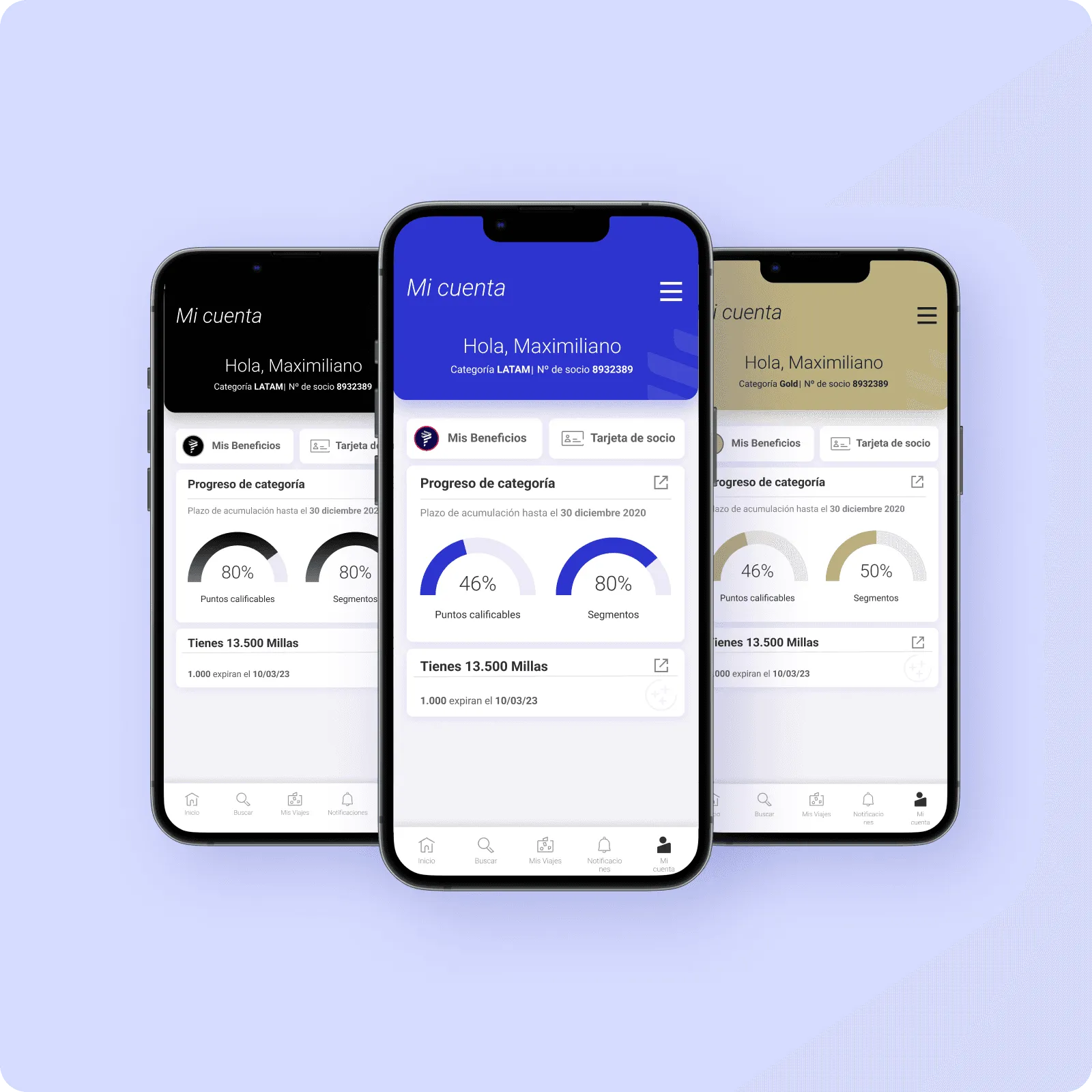
The new profile is built around personalization.
- Status: shows the customer’s level in the loyalty program, with a progress bar towards the next one.
- Points: a clear view of the loyalty points earned.
- Points store: a place to redeem points for rewards, right inside the profile.
The good, the bad and the ugly
The good
- Impactful product: delivered a product that matched the initial vision and met user needs.
- End-to-end ownership: from concept to implementation, keeping the product cohesive.
- Vision to product: turned an ambitious concept into a real product.
The bad (learnings)
- Stakeholder alignment: we needed better communication and consensus-building.
- Refinement and political conversations: decision-making needed to be streamlined to avoid wasting time.
- The pandemic: its uncertainty showed how much flexibility project planning needs.
The ugly
At times the transition between the old and the new product felt disjointed, a “Frankenstein” product. That hurt some key metrics, and showed the need for a more seamless evolution.
A cleaner app people came back to
The redesigned app has a clean, clutter-free interface that makes it easier to navigate and to reach the essentials.
- High-value customer NPS
- +3.1
- App store rating on key traveler flows
- 1.4 → 4.3
- CSAT score, compared to web
- +1.3 pt
- App usage, vs. previous quarter
- +17%
Other work
View case →